
As kayak fishermen, finding good fishing places close to a public launch point can be challenging. One of the best ways to find less pressured, fishable water is by using Google Earth. The quality of images on Google Earth can show you many features that can lead to discovering potentially new fishing spots. Some of these features include drop offs, shell or rock, deeper water, pinch points, flats, channels and intersections.
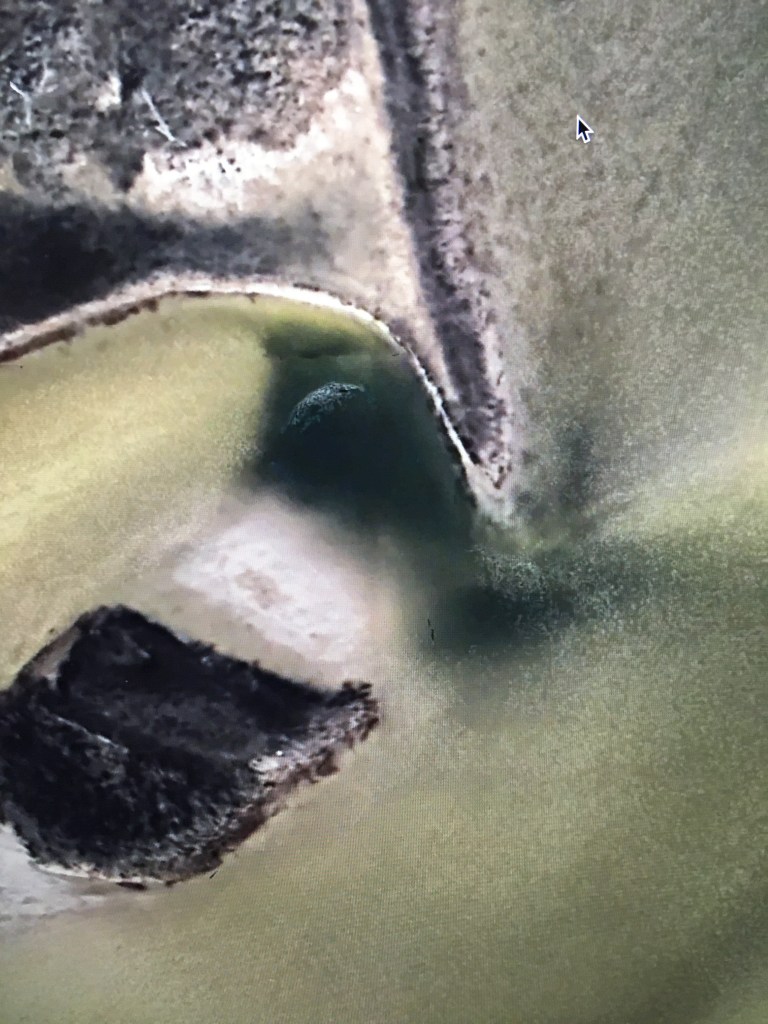
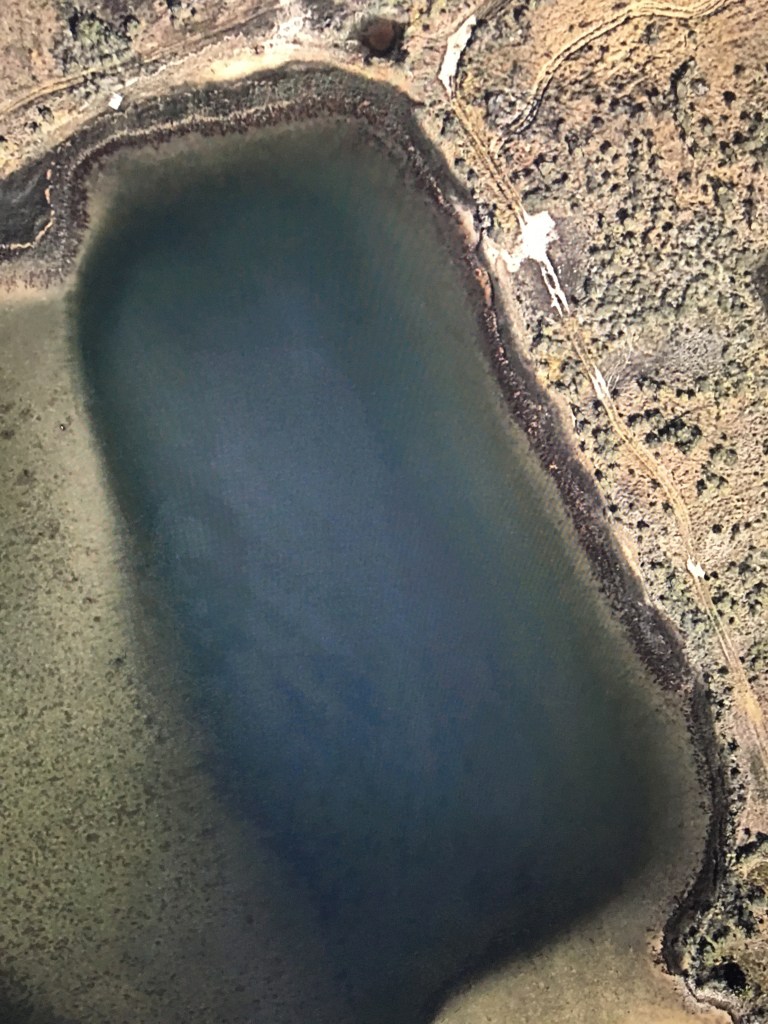
For the past few years, I have had my eye on a spot I found on Google Earth. It was a spot close to a popular launch and had a deep water pinch point and several deep water submerged ponds nearby. This summer I attempted to fish that area but found a new subdivision going in with a fence and no trespassing sign posted where the old launch was. I have always wanted to go back to this spot in the winter thinking the fish would be concentrated in the deeper holes. The only other access point I have found is about a three mile paddle to the places I wanted to fish. Two weeks ago on a Tuesday, I decided to make the six mile round trip.
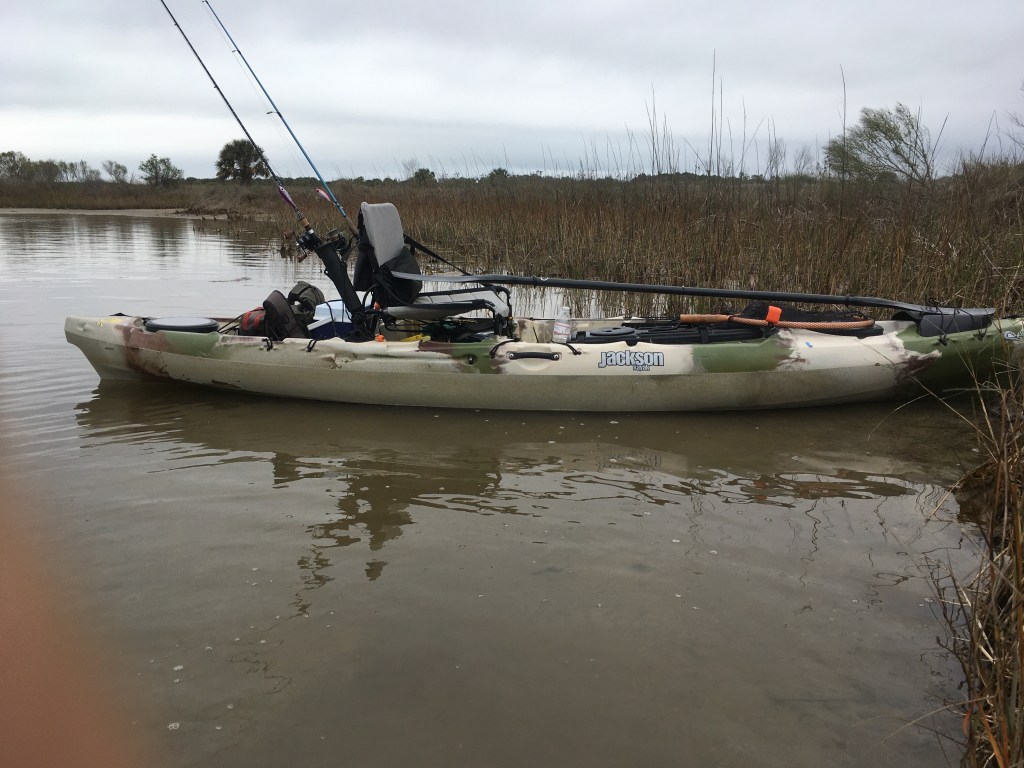
The weather was perfect. The temperatures were climbing after a strong cold front that should have pushed the fish into deeper water. After two days of strong north winds, the wind had shifted to the south east at about five to eight miles an hour. The sun was out, and I was hoping that there would not be any one around and the fish would be hungry. I waited until around noon to launch. I thought the warming water would trigger a good bite after such cold weather. The tide was going out and forecast to come in later that evening.
When I finished unloading my kayak and was preparing to launch, I saw another kayaker returning to the launch. As we often do, I asked him how he did and where he was from. He told me that he lived almost three hours away and was on the water at daylight. He also said that he used to live nearby and had been fishing these waters for over twenty years. His first response on the fishing was that there was no bait in the water and that the barometric pressure was too high. He, therefore, did not even get a bite. I quickly gave him some words of consolation and hoped his luck would not be the norm for the rest of the afternoon.
As I said good bye and started my long paddle, I wondered if choosing to fish the evening warm up would pay off. Often the southerly wind flow is in conjunction with a falling barometer, which many people think is more conducive to feeding fish. I personally don’t think the redfish are bothered by a high barometer, but sometimes the trout bite slows under those conditions. As I paddled away from the shore and rounded the corner, I immediately noticed bait flipping on the surface near a deep water entrance to a subdivision. The action was just on the downwind side of a small bunch of shell which was barely visible under water due to the low tide. I paddled closer and made my first cast of the day with a quarter ounce jig head and a four inch Down SouthLure in the Purple Reign color. As I bounced it back to my kayak, I felt a small thump followed by a bent rod and the first speck of the day was on. I could not help but look back to see if the the guy I just talked to was looking as he may have been as surprised as I was. Knowing I had a long paddle ahead, I forced myself to continue after a few more casts came up empty.
As I cruised past the shoreline, I made a mental note that the low tide had exposed a lot of structure that would probably hold fish on a higher tide. After a two mile paddle, I glided slowly up to the pinch point. The tide was still moving slowly out as I anchored my kayak in ankle-deep water and waded up to the deep hole created by the narrow tidal flow being pinched by two rocky shorelines. Stopping at the edge of the deeper water on the down current side, I cast my lure into the middle of the pinch point and let it fall toward the bottom and slowly drift back into the middle of the deeper hole. As I brought it up the steep side of the sandy bottom, a small trout thumped the DSL and started to run back into the deeper water. The water was crystal clear, so I could see his silver flash as he resisted coming back into the shallow water. Cold water is usually clearer water as it has less sediment, algae and plankton which can make it more clouded. On my second cast, I felt a small tick as I brought the lure up the deep, sandy slope. To my surprise, a small flounder was following my lure. I paused the lure in the gin clear water and watched as the flounder swam up to my lure and stopped right behind it as if to sniff out this intruder. I let it sit there for a few seconds and then gave it a small twitch. And bam! The flounder pounced on the DSL and tried to make a quick get away. I had a blast catching fish in this deep water pinch point, but my main goal was to keep going about a mile further and fish the deep water sand pit.
I neared the pit, and the wind started to pick up. I decided to make a drift as my twelve foot anchor rope would not reach the bottom of the deep pit. I set up for my first drift as I looked down into the deep, blue water wondering what I might find. Close to the end of my drift, I felt a small tick and the line became heavy. My rod started to bend, I set the hook, and immediately I felt the strong pull of a thrashing fish that did not want to come up from the depths. My first thought was that I had hooked a redfish because it began to strip a little line off my reel. It wasn’t long before I saw the silver flash and the shaking head of a nice trout as it danced on the surface fighting furiously. After a few strong runs, he slid into my net about the time my kayak touched the ankle deep shoreline. I took the DSL out of his mouth and put him on my measuring stick. He was fat and sassy reaching the twenty four inch mark. I always like to let the larger trout go, as they are the best breeders, which replenishes our bay system. Watching a larger trout swim away seems to give me as much pleasure as catching them. On my next drift, I got a strong hit, and when I set the hook, the weight of resistance disappeared in an instant. That could only mean one thing. I reeled in the remaining line without a jig head or lure and realized that my knot had broken. I retied and made two more drifts as the sun was approaching the horizon. On each drift, I caught a small speck and flounder.
I was not too crazy about paddling back three miles in the dark, so I left the deep hole and began my paddle back. On the way back, the tide was starting to come in strong. When I reached the pinch point, the sun was below the horizon, and I could see the water was rushing through the narrow passage. Suddenly I could hear the slurping sound of large feeding trout on the down current side. I picked up my DSL and made a cast directly into the fast moving current. Within seconds I felt the thump of a good size trout shaking his head defiantly just below the surface. After a quick passage around my kayak, I scooped him into my net and took a quick pic with the flash setting on my phone since the sunlight had diminished and let him go. It was now completely dark as I slid my anchor over the side in the shallow water and set up to keep casting to the slurping sound of feeding trout in the dark. While I was catching more fish during the feeding frenzy, two sand hill cranes came whooshing by bellowing out a warning to the feeding trout as they headed for their nesting grounds. The tide slowed down, and so did the bite. Night time brings out the hyperawareness of your senses, and it was a little spooky as the coyotes began to howl at the intruder in their marshy territory. It had been dark for about an hour, and I still had a two mile paddle ahead against the wind and current to get back to my launch site. On the way I enjoyed the sounds of the night and the stars above. I was almost there, but I just couldn’t help myself. I had to stop and fish one of my favorite pier lights. However, after two casts and two dink trout, I said uncle. I was tired and hungry, and visions of Whataburger danced in my head.
Well, I had finally explored the area I had found on Google maps, and the timing seemed to be good. I love finding new places to explore and fish in my kayak. Regardless of how the trip went, I would have been happy just getting out in God’s creation and taking in all it has to offer. It was especially pleasing to catch fish where you think they might be during this time of year. I post this not to boast but to encourage others to get out and explore the places you may find on a map some where far or near. Remember to respect the land owners and take care of God’s creations. I did not see another boat all day and sometimes that can be gratifying in this crowded world.
Galatians 1:10 says “Am I now trying to win the approval of human beings, or of God? Or am I trying to please people? If I were still trying to please people, I would not be a servant of Christ.”
Christ died on the cross so that we may have eternal life with him. I love the beauty of his creations here on earth and look forward to the beauty he has created for believers in heaven.
Enjoy the short video.
God bless you and thanks for reading my blog.
Tim Lumpkin
Blog: Legacy-outdoors.net
Instagram: @tlump10
Facebook: Legacy-Outdoors.net
Twitter: @legacy_net
 Legacy Outdoors
Thank you. Blessings.
Sent from my iPhone
>
LikeLiked by 1 person
Great read ! Thanks. Blessings.
LikeLiked by 1 person